A Basketball Screen: Watch the Defender's Choice
Read a basketball screen by spotting the defender’s route, the ballhandler’s available space, and whether a shot, drive, or pass makes sense next.
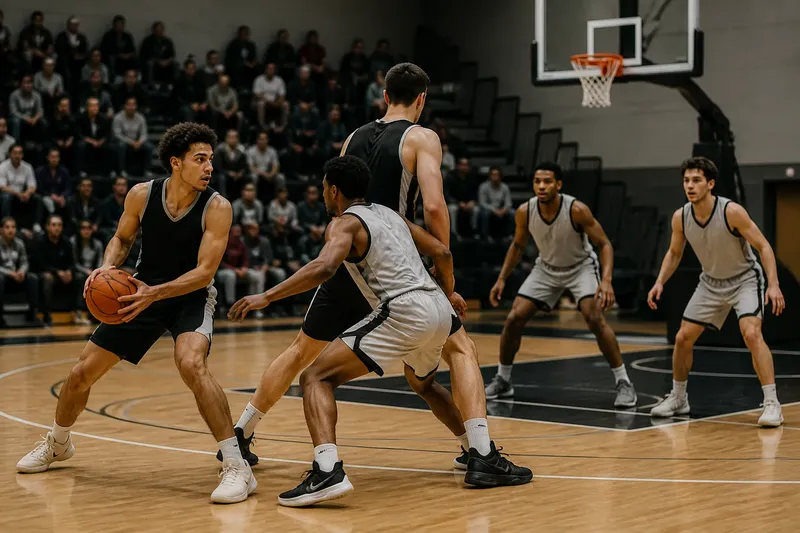
A basketball screen is easier to read when you follow the defender guarding the ballhandler. Their route around the screener gives you a quick clue about what the ballhandler can do next.
What should you notice before a basketball screen?
Keep the ballhandler and screener in view, then note where the ballhandler’s defender is standing. The screen is useful context, but the defender’s position tells you which direction may be harder to take.
An on-ball screen is set near the ballhandler to obstruct the defender’s path. Its effect depends on the approach: a screen placed near the sideline may leave the middle open, while one arriving from the middle may shape the ballhandler’s route toward the sideline.
Also notice the screener’s defender. If that player waits near the lane, a drive may meet resistance. If they step outward, space may open behind them. These are possibilities rather than promises; the ballhandler may choose another option or the defense may recover.
What does each defensive response allow?
Going over: The defender follows around the screen’s outside edge, often to stay close to a capable outside shooter. The ballhandler may turn toward the basket, but the screener’s defender can close that route. Look for a pass to the screener, a pull-up shot, or a change of direction.
Going under: The defender passes beneath the screen, aiming to remain between the ballhandler and the basket. The ballhandler may have room for a jump shot before the defender returns, or may keep the dribble and attack if the defender gives up too much ground.
Switching: The two defenders exchange the players they guard. The ballhandler may face a defender with a different size or speed profile, but that mismatch is not an automatic invitation to attack. The offense might hold the ball, pass, or use another screen.
Showing or hedging: The screener’s defender steps toward the ballhandler for a moment, then aims to return to the screener. The ballhandler might pass around that pressure, wait for the original defender to catch up, or pull the ball back and reset.
How can you judge the space after the screen?
Rather than trying to track every player, look at the ballhandler’s immediate options. Is there a clear route to the basket, a passing lane to the screener, or room to stop for a shot? Then notice whether a teammate’s defender has moved far enough to change one of those options.
- Screen angle: If the screen points the ballhandler toward the middle, check whether the lane is open; if a defender is waiting there, expect a turn toward the sideline or a pass.
- Starting position: If the ballhandler’s defender is already shading one side, watch for the ballhandler to use the screen toward the opposite side; if that route is blocked, look for a reset.
- Screener’s movement: If the screener rolls toward the basket, check whether a defender follows; if they do, the ballhandler may have room elsewhere, while a defender who stays out can leave the roll available.
- Help defender’s location: If a defender near the lane steps toward the ball, check which teammate they leave; if another defender covers that player, the pass may be less attractive and the ballhandler may keep the ball.
- Ballhandler’s pace: If the ballhandler turns under control, expect time to assess a pass or shot; if the turn is rushed, watch for a safer reset rather than assuming a clean lane exists.
- Sideline distance: If the screen is near the sideline, check whether the ballhandler has room to turn; if the boundary limits that route, a retreat dribble or pass may be the available choice.
What happens in an invented possession?
Imagine a hypothetical possession with the ballhandler on the right wing, a screener approaching from the middle, and the screener’s defender near the lane. A second defender stands near the free-throw line. These starting positions leave some space between the screen and the sideline, but place a defender near a drive through the middle.
The ballhandler’s defender goes over the screen. The ballhandler turns toward the middle, and the two defenders briefly occupy the same route. The screener rolls toward the basket. The ballhandler now has three observable choices: shoot if the trailing defender leaves room, pass to the roller if the lane defender steps toward the ball, or pass elsewhere if both defenders stay close.
In this invented situation, the lane defender steps toward the ballhandler. The ballhandler passes to the roller, and a weak-side defender leaves a corner shooter to cover the pass. The roller then has a tradeoff: pass to the corner if that lane remains clear, or continue toward the basket if the defense closes the passing route. The screen has shifted the defense, but the next decision depends on the roller’s view of the court.
What questions do readers ask about basketball screens?
Why does a defender go under a basketball screen?
Going under can keep the defender closer to the basket and reduce the ballhandler’s immediate driving route. It also leaves room for a shot, so the ballhandler’s position and the defender’s recovery affect what happens next.
How is switching different from hedging?
On a switch, the defenders exchange assignments and stay with their new players. On a hedge, the screener’s defender steps toward the ballhandler briefly, while the original defender tries to return to their assignment.
Why does a screener roll to the basket?
The roll gives the ballhandler a target moving toward the hoop after the screen. It can be useful if the screener’s defender steps toward the ball, though another defender may move over to cover the roll.
Does a basketball screen always produce a shot?
No. The offense may use a screen to change the defenders’ positions or prepare another action. The result could be a driving lane or passing angle, not an open shot.
How can you keep track of the ballhandler’s options?
Keep your eyes near the ballhandler and screener, then follow the defender guarding the ball as they move around the screen. Once the route is clear, check whether the ballhandler has a shot, drive, or pass available. This keeps the reading focused on the immediate decision rather than a full-court inventory of defensive assignments.
For a basketball screen, name the defender’s route—over, under, switch, or show—and ask what the ballhandler can do from there. Then check whether the space is genuinely usable or only appears open for a moment. That small distinction often explains why a promising screen leads to a pass or reset instead of a shot.